
It’s fun to paint fall leaves, especially sassafras ones! You can learn some of my favorite techniques next month if you’ve signed up for email updates!
ANSWER TO MYSTERY TECHNIQUE #119:
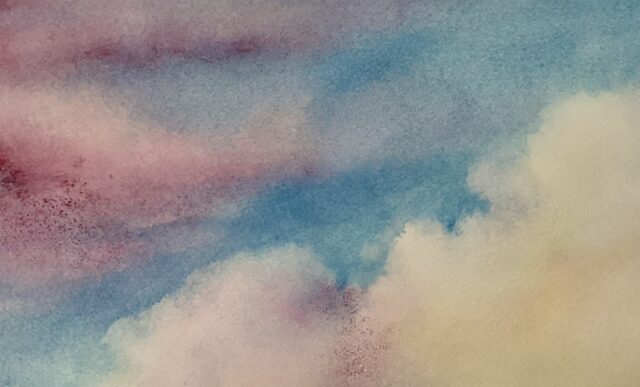
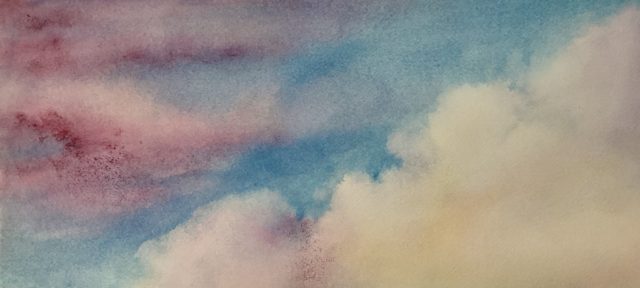
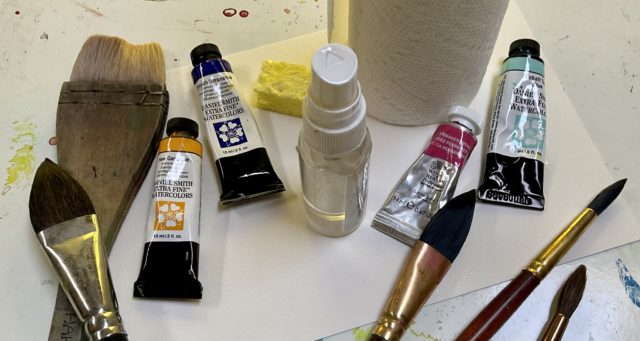
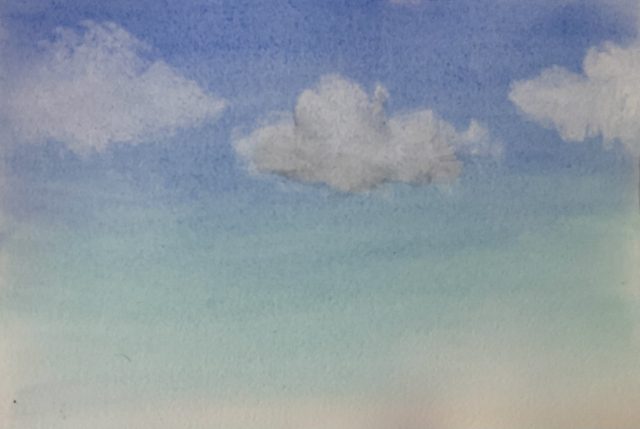
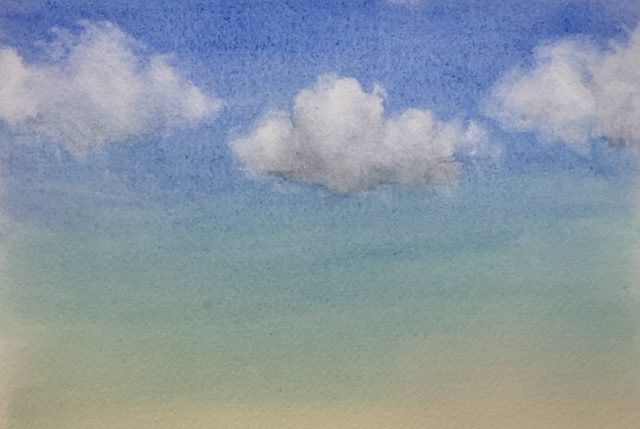
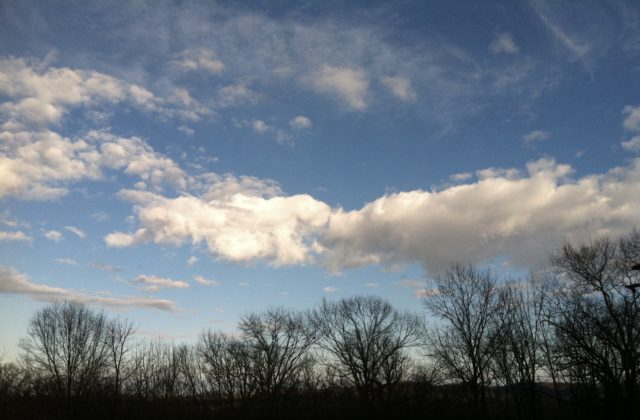
Negative painting is the key to this version of clouds! First I mixed water with some Winsor & Newton Cerulean Blue to make the basic sky color; then I partially wet the paper, using a spray bottle to make a transition zone between wet and dry in the approximate shape of the bigger, lower cloud. Next I “found” the clouds by painting around them with the blue. The paint followed the water in the sprayed transition zone, making it easier to mimic the irregular top edges of a cumulus cloud with my brush. Since Cerulean Blue tends to stay where you put it on wet paper, it was easy to create the softer edges of the higher clouds as I painted around them.
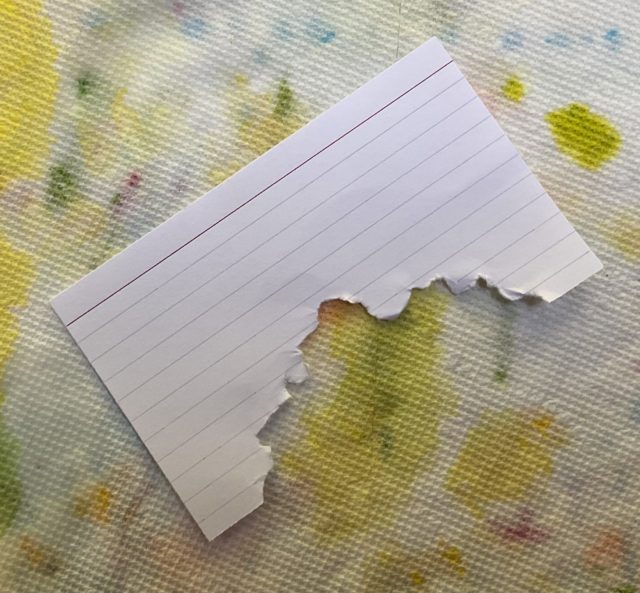
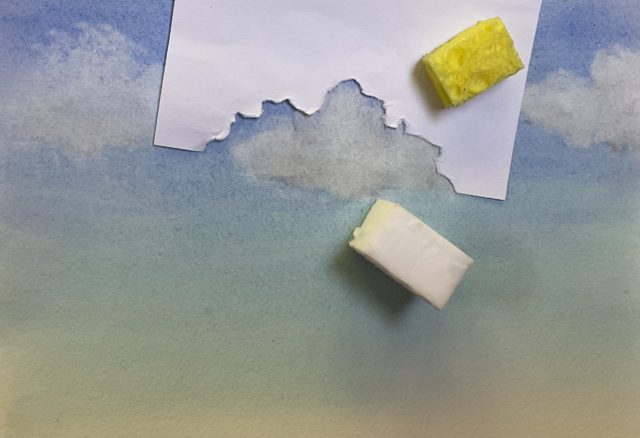
After this layer dried, I rewet the entire piece of paper to add some subtle yellow and the first layer of pink. Because I was using soft brushes and Arches paper, none of the first layer lifted. I darkened the blue of the sky in the next layer, using a damp piece of sponge to make transitions between wet and dry paper. The darker pink and violet shadows were added later and blended in with the damp sponge.
 Home
Home