Category Archives: Mystery Technique

Mystery Technique

Mystery Technique #102

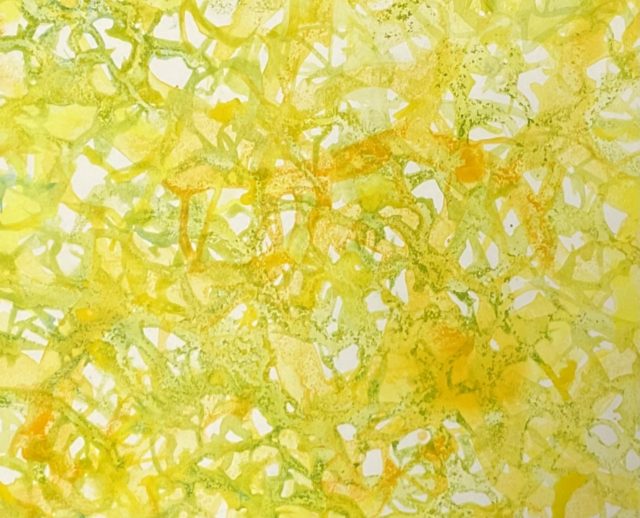
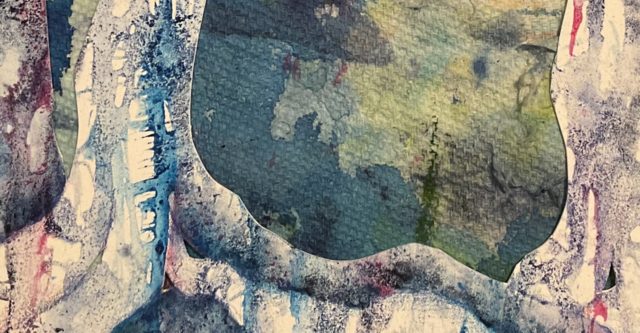
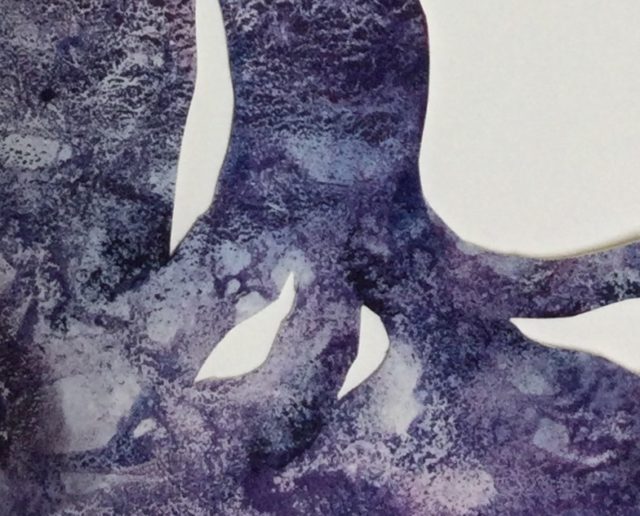
Here’s a closeup of my Web of Interbeing. Curious about how I created the texture of the central tree? You can learn more about the special techniques next month if you’ve signed up for email updates!

ANSWER TO MYSTERY TECHNIQUE #101:

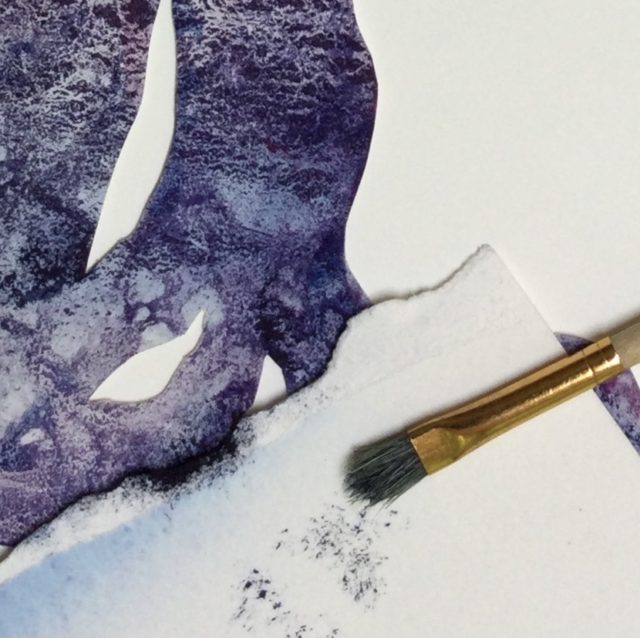
Painting on MDF (medium-density fiberboard) for the first time was a fun bonus of doing the bunny for Cheekwood’s Great Spring Art Hop! It was interesting to paint on such a smooth surface; I had to experiment with different tools to figure out a way to hide brushstrokes. After gessoing the surface and letting it dry, I added thin layers of acrylic inks and enough water to create a sense of flow and spontaneity. These pieces of thin styrofoam became my favorite tools to manipulate the paint:

Cutting shapes in some of the edges gave me another way to vary the marks.

Mystery Technique

Mystery Technique #101

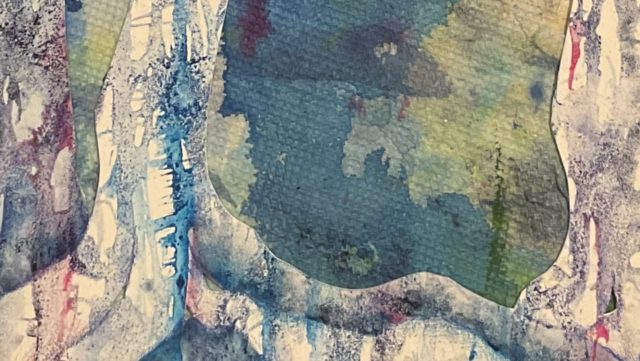
Here’s a closeup of the front of my bunny for Cheekwood’s Great Spring Art Hunt on April 2nd and 3rd! You’ll be able to see it in person then if you find its hiding place, although you’ll have a hard time getting this close to it. You can learn what special techniques I used next month if you’ve signed up for email updates!

ANSWER TO MYSTERY TECHNIQUE #100:

As you can see below, I cut the dead tree out of a piece of watercolor paper covered with another version of the wrinkled plastic technique; then I scratched in some additional lines and added some shading to create a sense of depth:

For the final step, I rubbed it with sandpaper to get the weathered look of a long-dead snag:

Mystery Technique

Mystery Technique #100

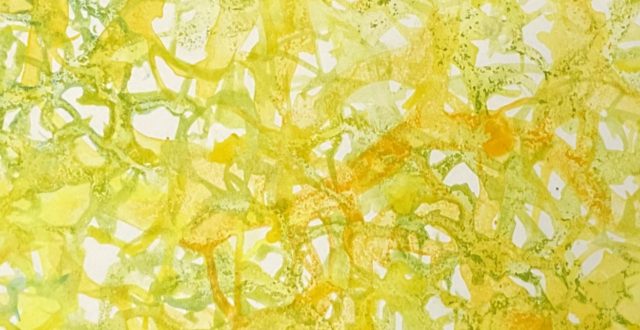
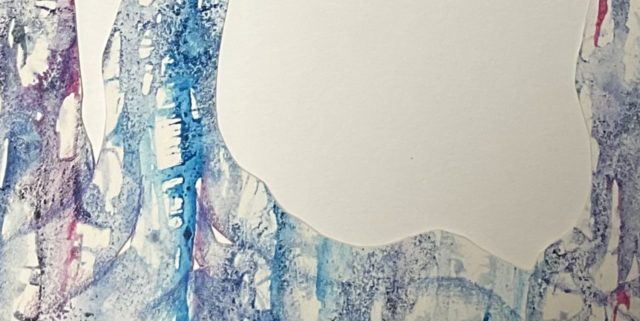
Here’s a closeup that shows part of my Web of Interbeing project. Curious about what techniques I used? You can find out next month if you’ve signed up for email updates!

ANSWER TO MYSTERY TECHNIQUE #99:

I’m pleasantly surprised by how much drawing is required as part of my ANFT Guide Training, and it’s deepening my connections to where I live in ways I didn’t anticipate. Some long-term projects, like keeping a nature journal, are due at the end of the course. Other assignments, like mapping our own watershed, are part of specific learning modules. It was intriguing to trace the path that water from my hill travels before it finally reaches the ocean and to learn the names of the connecting branches, creeks, and rivers that play a part in the story. Having to sketch various hazards that might be encountered here, like poison ivy, chiggers, and ticks, has helped me see them in new ways. Our Trainers have shared some wonderful resources, like this video with Ralph Ammer about how drawing helps you think:

https://youtu.be/ZqlTSCvP-Z0

They also recommended this excellent book by John Muir Laws:

You might enjoy the step-by-step videos on his website:

https://johnmuirlaws.com/