Category Archives: Mystery Technique

Mystery Technique

Mystery Technique #93

Wonder what special techniques I used in this painting? You’ll find out the details in August if you’ve signed up for email updates!

ANSWER TO MYSTERY TECHNIQUE #92:

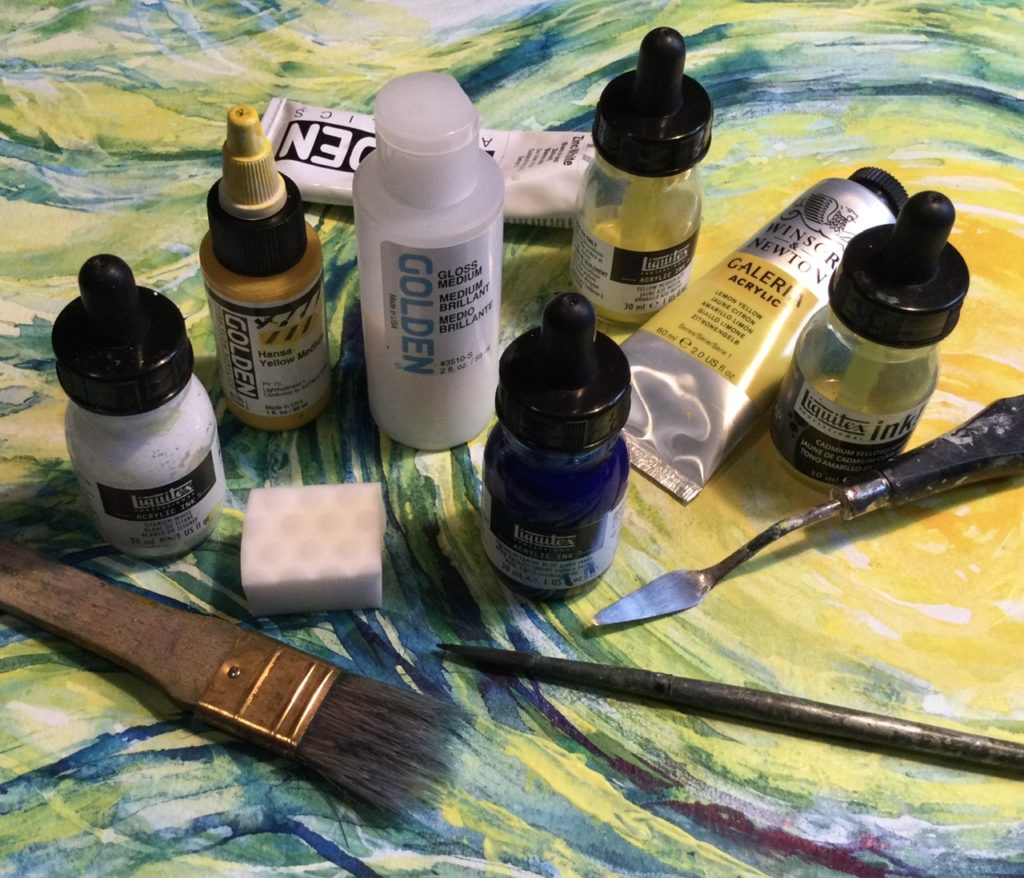
Painting with your non-dominant hand is a fun way to shake things up! I started by choosing my favorite acrylic ink primaries and some unconventional tools, which you can see below:

Then I let my intuition and my left hand make decisions about colors and shapes. Since I was painting outside, most of it dried quickly, making it easier to add a second and third layer. The feather and the tips of the droppers that come inside these bottles are great for making thin lines, and these specially modified bristle brushes can take the place of multiple tools.

The “getting unstuck” technique I mentioned is from Lynda Barry’s What It Is, which has other creative writing and drawing exercises you might like to try. She suggests setting a timer for 2 minutes, then very very slowly drawing a spiral until the timer goes off. It does seem to help!

Mystery Technique

Mystery Technique #92

Interested in trying Dream/Intuition paintings? Next month I’ll share my favorite tips to get you started, including a 2-minute technique to get “unstuck” in painting and writing!

ANSWER TO MYSTERY TECHNIQUE #91:

Old rock walls have amazing textures! Here are a couple of the photos that inspired my rock wall experiments:

After doing the plastic-on-wet paint technique for the first layer and letting it dry, I added some acrylic spattering and a few watercolor glazes. Next I used a craft knife on dry paper to scratch in different depths of linear marks. Here’s the result:


When I added some wet glazes, the scratched areas turned dark:

Announcements Mystery Technique

Mystery Technique #91


Curious about how the special techniques I used to experiment with rock wall textures? You can find out the details next month if you’ve signed up for email updates; I’ll explain more about it in May!

ANSWER TO MYSTERY TECHNIQUE #90:

The treefrog is another example that started with the plastic-on-wet paint technique! Here’s what it looked like when I took off the plastic:

Cope’s Gray Treefrog is very common in the neighborhood woods; the calls of the males are a classic late spring/summer nighttime sound, especially after a good rain. I consulted multiple photos to help me to choose a section that best captured the look of the skin; then I taped a tracing of my drawing to the paper and cut through both layers:

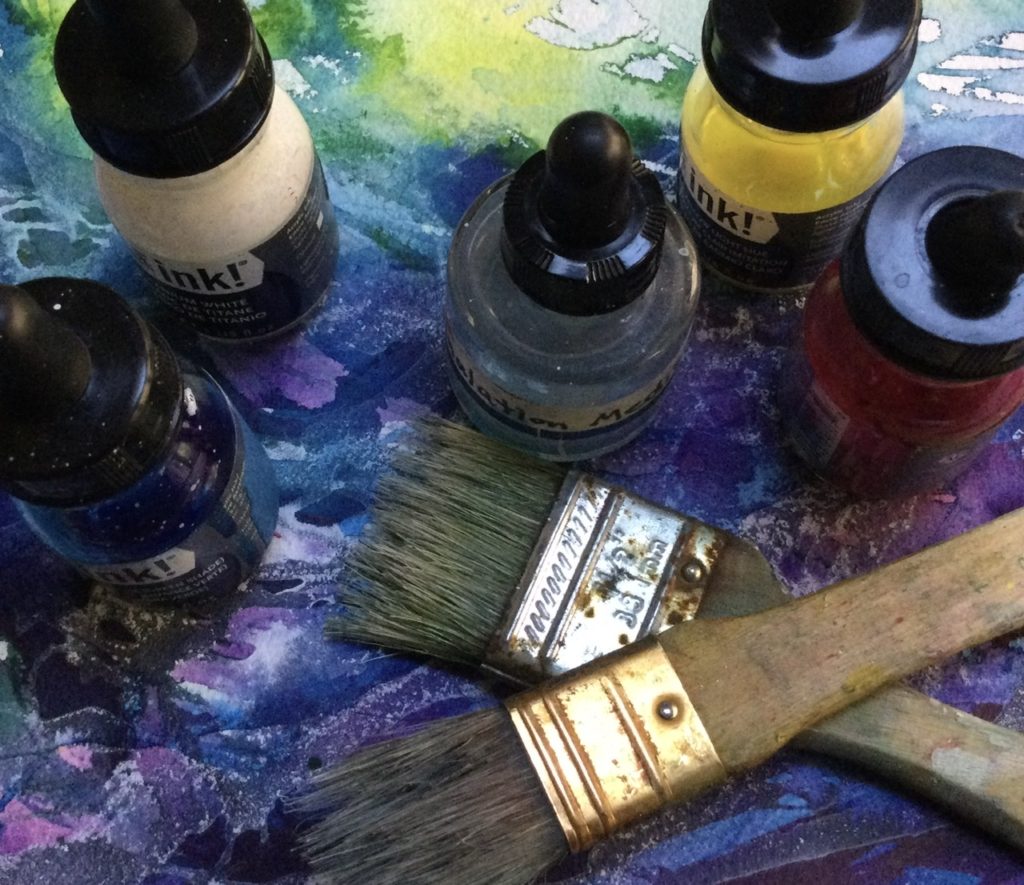
These are the colors and tools I used:

Just like the real ones, my painted treefrog can vary in color if you change the background!