Category Archives: Mystery Technique

Mystery Technique

Mystery Technique #85

These tickets are one of my favorite creativity tools — I’ve been using them for years! Want to learn more? You can find out multiple ways to use them next month if you’ve signed up for email updates!

ANSWER TO MYSTERY TECHNIQUE #84:

This is a great example of how important paper choice can be — I’ve only been able to get this technique to work on Arches cold press. Here are my tools:

I started with an underpainting of white diluted acrylic ink, painting a few linear shapes to vary the surface. After these dried, I used large hake brushes to thoroughly wet the paper, then added diluted Hydrus watercolors, Winsor & Newton Granulation Medium, and more water to make the liquid paint flow across the surface. By tilting the paper, using pipettes to apply the paint, and minimizing the use of brushes, I was able to increase the granulated effects. When the surface started to dry, I sprayed it with a spray bottle to increase the texture and pressed a wadded-up dry paper towel into the damp paint, which partially lifted the paint and created more complex textures. The “paper towel texture” doesn’t seem to work as well on other brands of papers.

Mystery Technique

Mystery Technique #84

8C7C9C30-1E90-447B-B80A-D3EABF69F64E


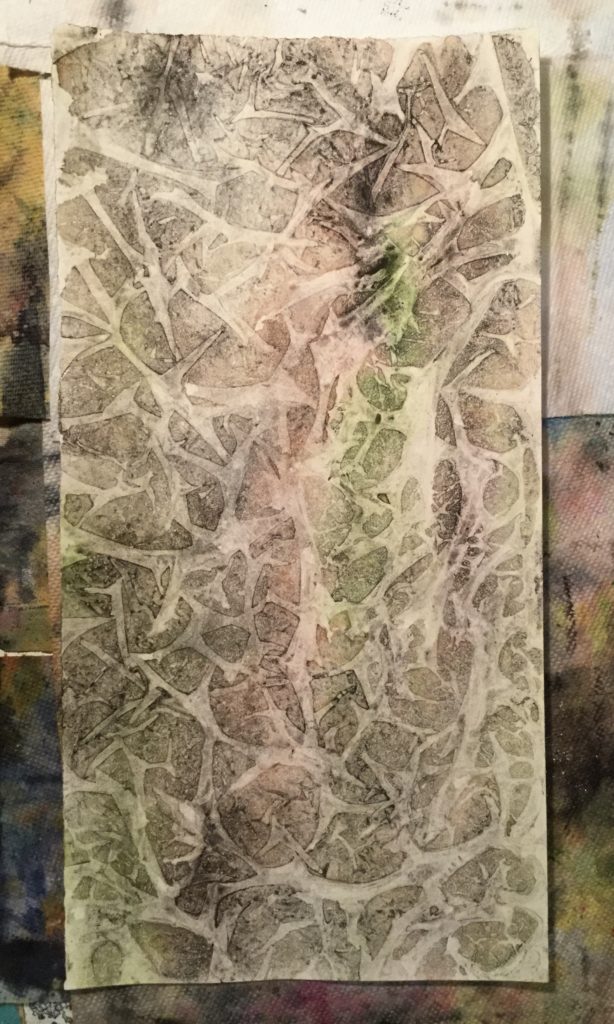
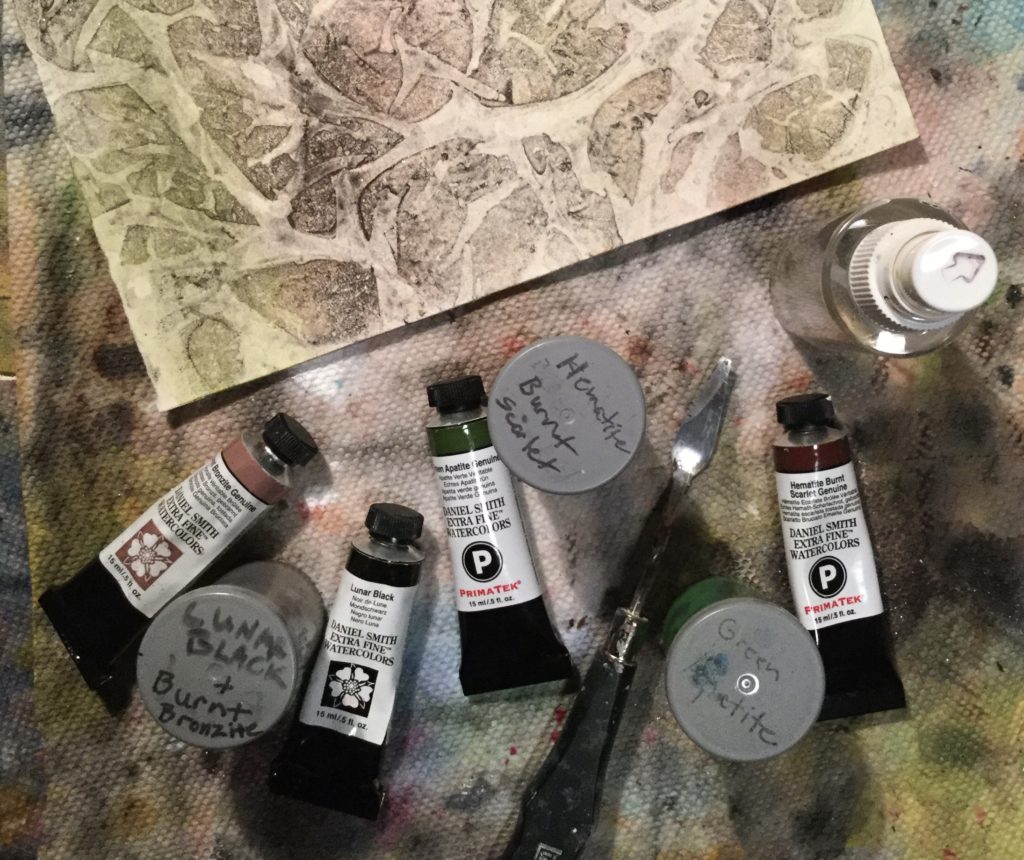
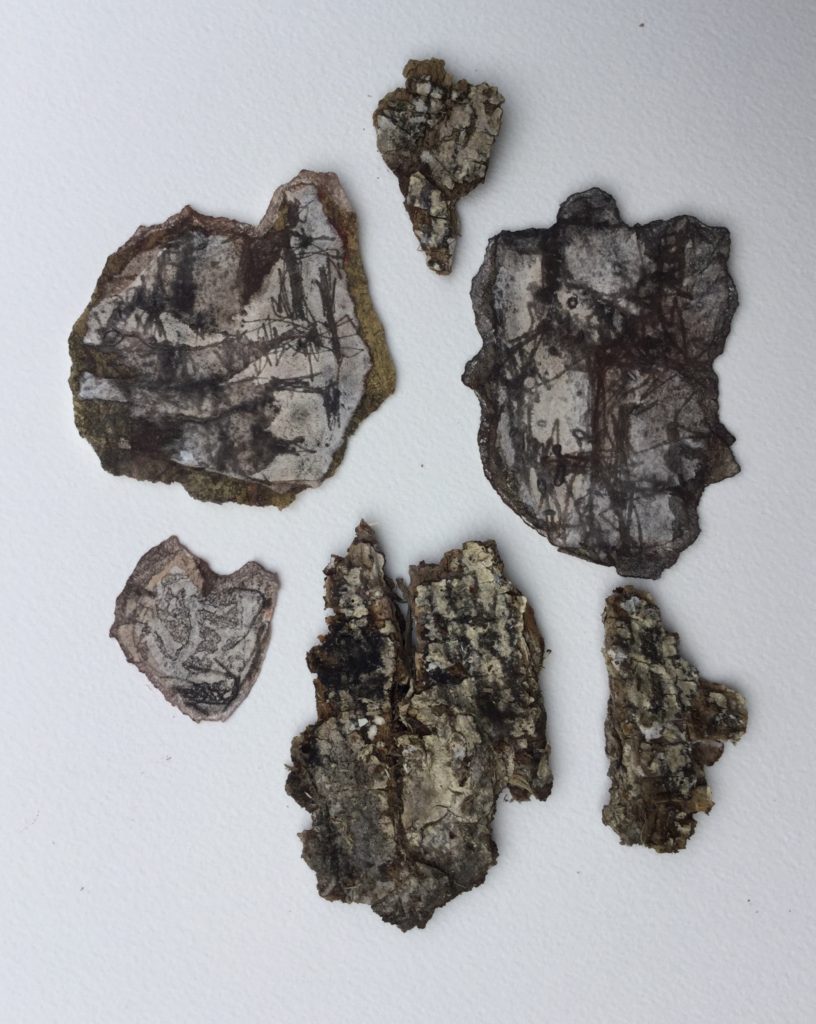
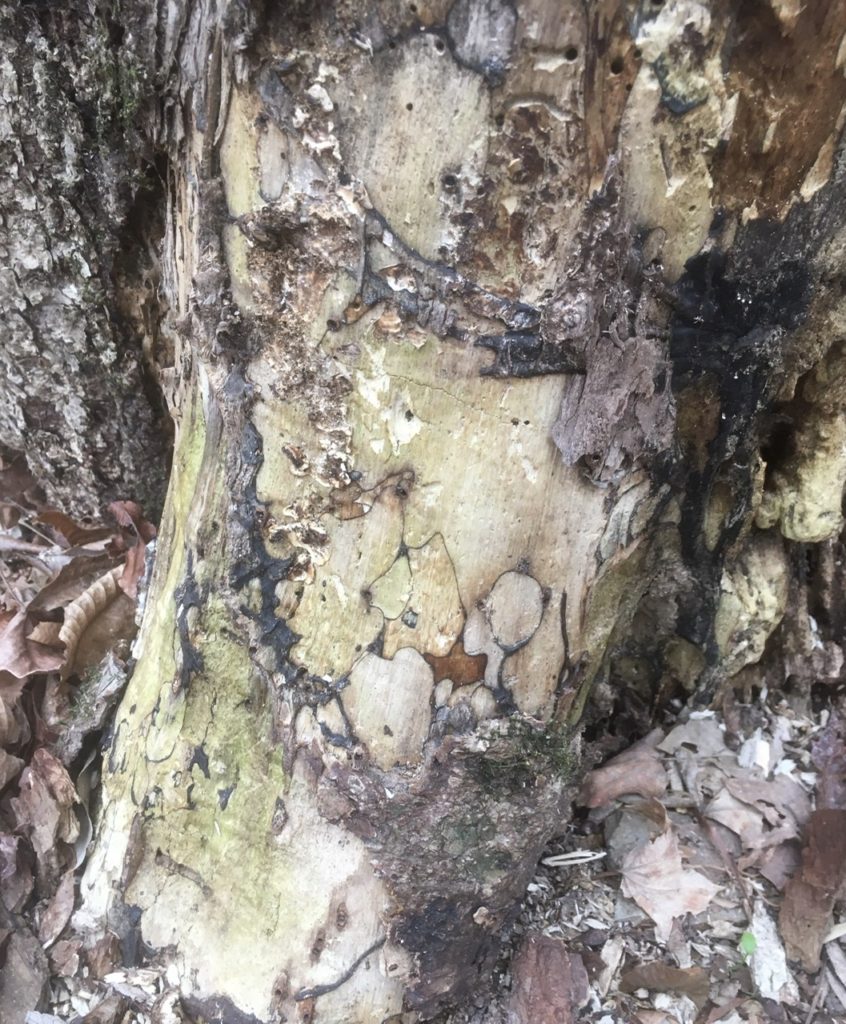
Curious about how I created these textures? You can find out the special techniques I used next month if you’ve signed up for email updates; I’ll explain more about it in September!


ANSWER TO MYSTERY TECHNIQUE #83:

This caterpillar started as an ink drawing, which I traced with a graphite pencil onto clear contact paper. I found out the hard way not to use a marker for this — even if the contact paper tracing has been dry for days, the marker around the edges tends to leave dark smudges on the watercolor paper when you press it down. After I finished painting the leaves, I removed the contact paper caterpillar and put down contact paper eyes as temporary masks while I painted the oranges in the body with diluted acrylic ink. When that layer was dry, I removed the contact paper eyes and started adding detail with a .005 black Micron pen. The last step was to add the blue spots with a mix of white gouache and acrylic ink.


Mystery Technique

Mystery Technique #83


E18F8243-669F-4FE3-9D5F-A7D48ED06081


This is a spicebush swallowtail caterpillar — it’s my favorite kind! You can find out the different steps in my caterpillar-painting process next month; I’ll share the details in August, so be sure to sign up for email updates!


ANSWER TO MYSTERY TECHNIQUE #82:

Part 1:

I began by using a brush loaded with lots of water to draw a loose network of looping shapes on hot press watercolor paper; then I dropped granulation medium, diluted yellow acrylic ink, and yellow and green liquid watercolor into the wet areas, leaving small patches of white paper.


Part 2:

After Part 1 dried, I taped a tracing paper drawing on top to act as a template, then cut out the basic leaf shapes with a craft knife. Next I painted the veins with Winsor & Newton’s Permanent Masking Fluid to preserve the underpainting — it’s so much easier to apply than other masking fluids, and you don’t have to remove it!  I added additional layers of yellow, green, and blue to create more dimension. After the paint dried, I stippled with a black Micron .005 pen to increase the sense of depth; you have to look closely to see the little dots!