Category Archives: Mystery Technique

Mystery Technique

Mystery Technique #138

Curious about the techniques used here? You can learn more next month if you’ve signed up for email updates!

ANSWER TO MYSTERY TECHNIQUE #137:
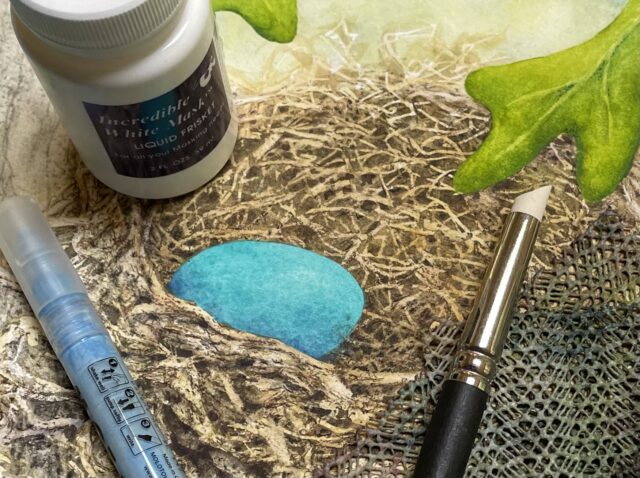
This one uses 3 different masking techniques! First I cut the leaves and egg out of clear contact paper and attached the shapes to the watercolor paper; this kept those areas free of paint while I worked on the nest. I started with pale golden brown. After this layer dried, I used a Molotow Grafx art masking liquid pump marker to mask thin crisscross lines inside the nest. To create the thicker grass on the outside of the nest, I used a Colour Shaper dipped in Incredible White Mask. When all the masking had dried, I painted the nest with a darker brown and let that dry; then I painted the background and branches. The next step was to remove all the masking fluid:
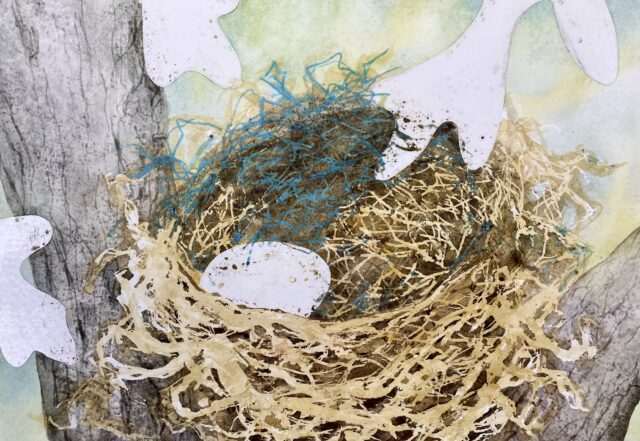
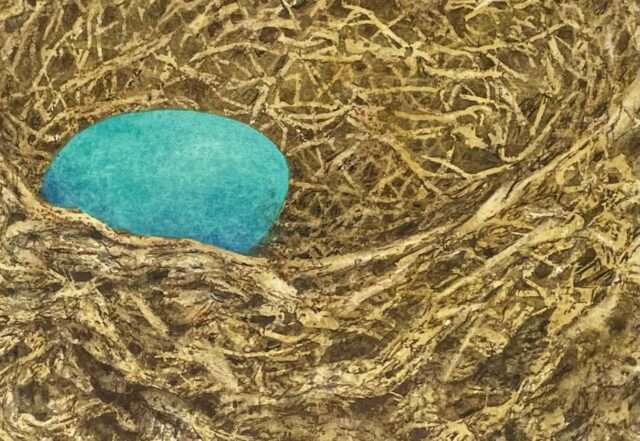
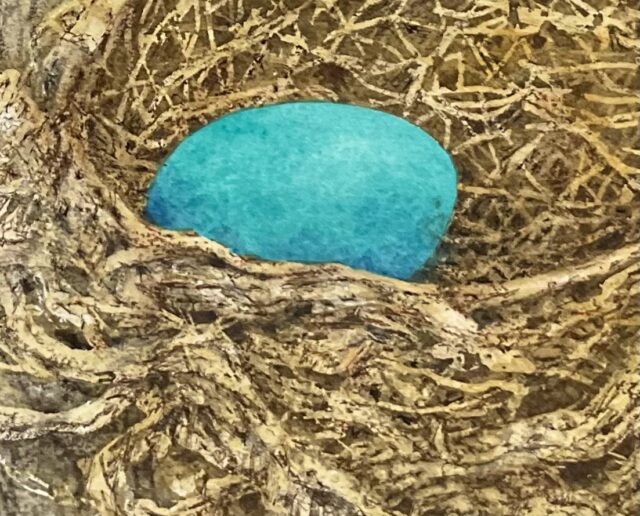
I added more texture with a piece of shelf liner and a .005 Micron pen. After finishing the nest, I removed the contact paper and painted the egg and leaves.
Mystery Technique

Mystery Technique #137

Curious about the techniques used here? You can learn more next month if you’ve signed up for email updates!

ANSWER TO MYSTERY TECHNIQUE #136:

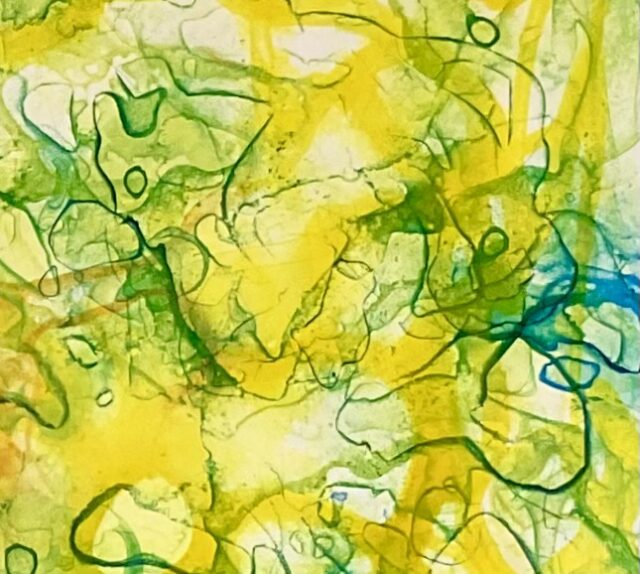
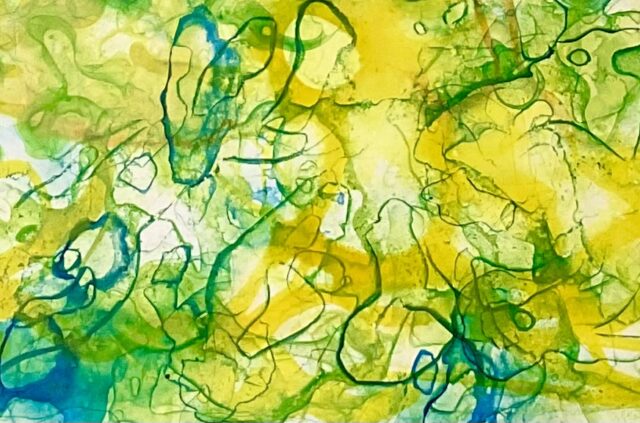
Fun with Claybord continues! First I took a big brush and wet the surface, which created a series of irregular puddle shapes. Next I dropped diluted acrylic ink into the puddles. After the outside edges of the shapes dried, I wiped the liquid paint away from the centers, leaving the darker outlines. I repeated the process several times to create layered transparent shapes.

Mystery Technique

Mystery Technique #136

Curious about the techniques used here? You can learn more next month if you’ve signed up for email updates!

ANSWER TO MYSTERY TECHNIQUE #135:

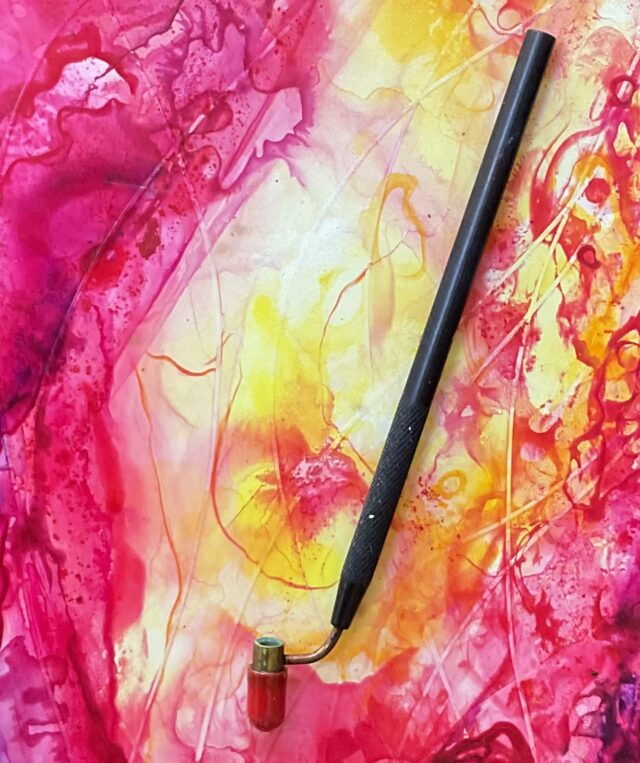
You can create interesting linear effects with a Kemper Fluid Writer on Claybord! First I diluted white acrylic ink and used a pipette to fill the cup of the Fluid Writer. Next I removed the cap and tested the results on a scrap of paper before using the tool to make a series of consistent white lines on the Claybord. After this layer dried, I added multiple glazes of diluted acrylic ink.