Category Archives: Mystery Technique

Mystery Technique

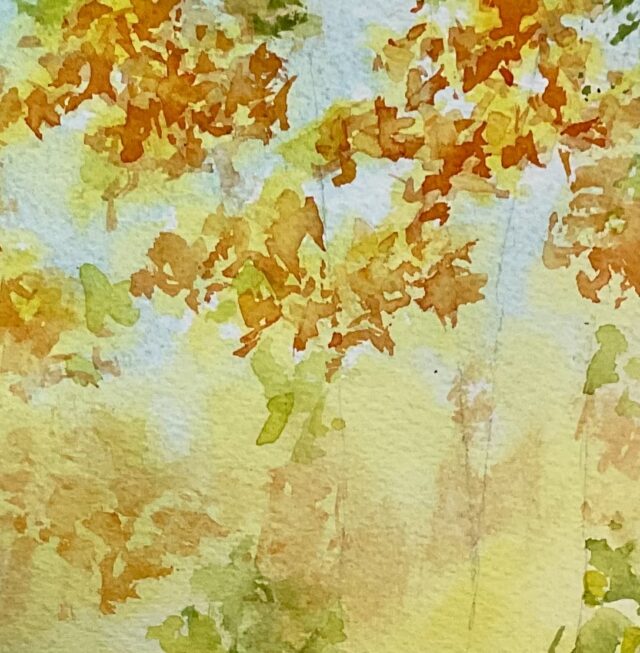
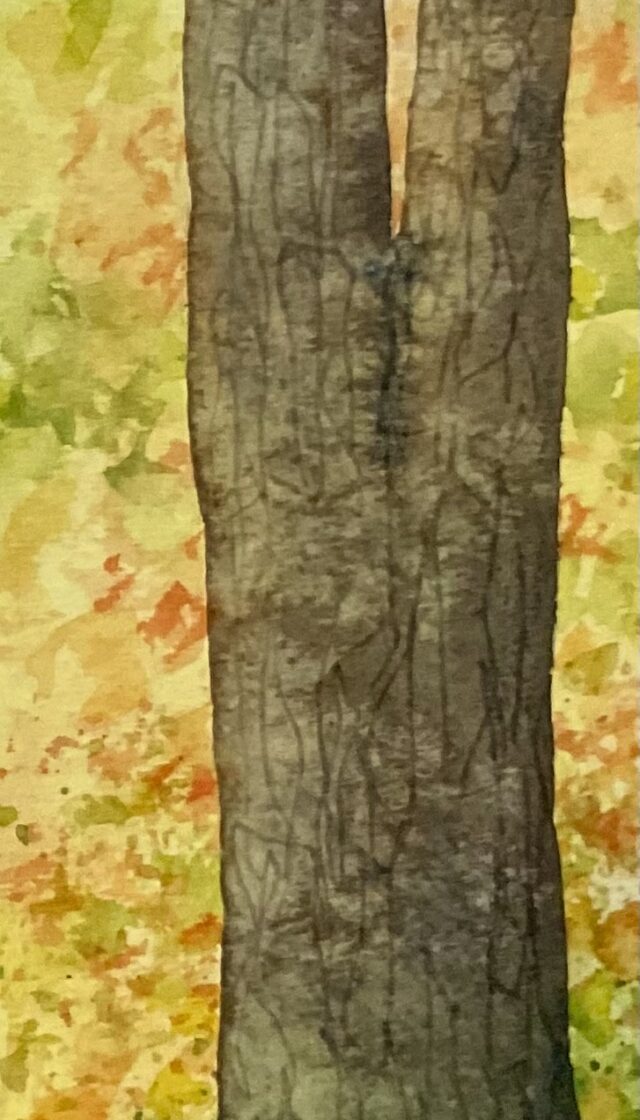
Mystery Technique #128

Curious about the techniques used here? You can learn more next month if you’ve signed up for email updates!

ANSWER TO MYSTERY TECHNIQUE #127:

It’s fun to combine watercolor with ink, and if you use Micron pens, you can paint over the ink without any smearing! After drawing the trillium on tracing paper, I taped it to the back of 140 lb. watercolor paper, then put the paper on a light box to trace the outline with watercolor pencils on the front. Next I used a Micron .005 black pen to add dimension to the drawing. After the ink dried, I painted a pale green underpainting on the leaves and scratched in the veins with the end of a metal paint tube. I created the mottled look by applying a darker green with a wadded up piece of plastic and a ratty brush.

Mystery Technique

Mystery Technique #127

Curious about the techniques used here? You can learn more next month if you’ve signed up for email updates!

ANSWER TO MYSTERY TECHNIQUE #126:

This technique uses ice cream salt and requires a little patience! First I used a template to draw a circle before painting it with intense yellow watercolor paint. After the yellow dried, I glazed the circle with a layer of blue-green and placed some big crystals of ice cream salt into the wet paint. As the salt and the watery green slowly interacted, some of the yellow underpainting began to reappear. Interesting textures gradually developed around and underneath each crystal.

Mystery Technique

Mystery Technique #126

Curious about the techniques used here? You can learn more next month if you’ve signed up for email updates!

ANSWER TO MYSTERY TECHNIQUE #125, PART 2:

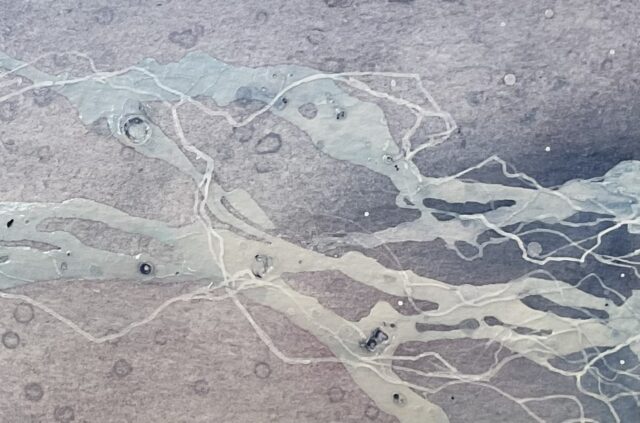
Watercolor pencils are a big part of this technique! Intriguing edges can form as watery paint slowly evaporates:

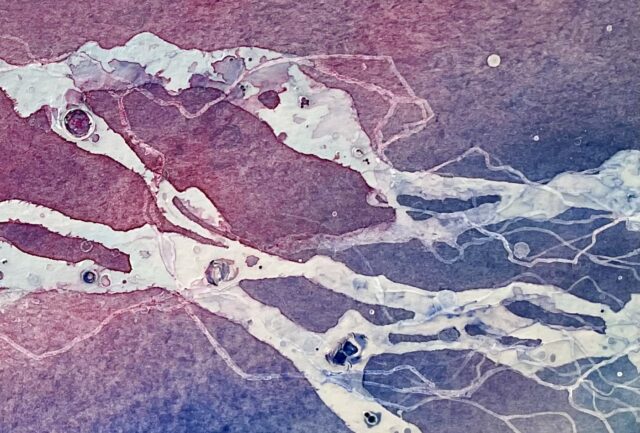
Here’s another part of the same painting where less is happening, and some enhancement is needed:

Because watercolor pencils can make so many different kinds of marks, they can effectively mimic what happens during evaporation. It’s fun to experiment with working on both wet and dry paper, dipping the pencil tip in water, and drawing with the side of the tip. See if you can spot the differences in this final version, which also includes the background and another layer of paint for increased depth: