Tag Archives: Wet-in-wet

Mystery Technique

Mystery Technique #154

Curious about the techniques used here? You can learn more next month if you’ve signed up for email updates! 

ANSWER TO MYSTERY TECHNIQUE #153:
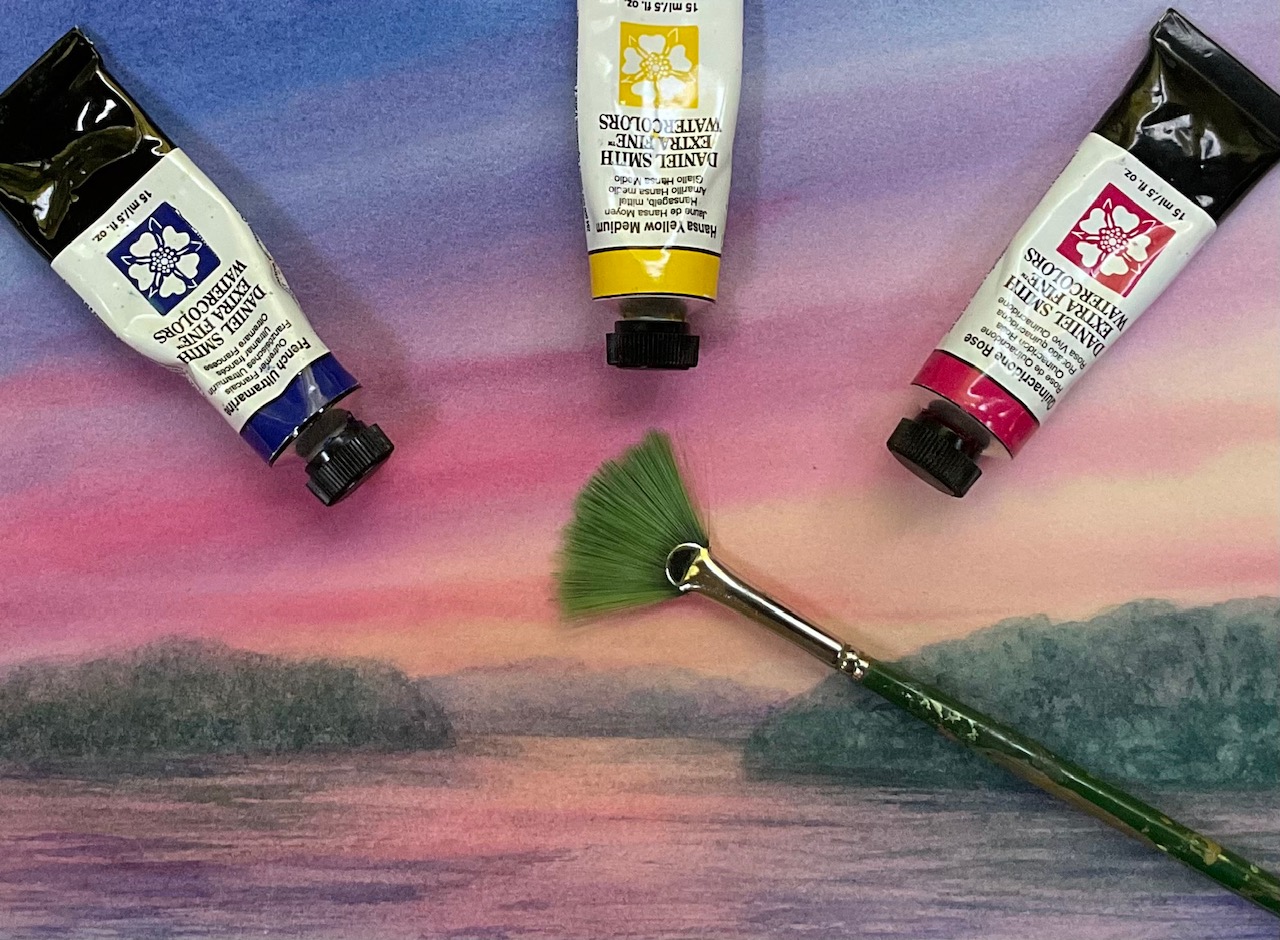
Painting water is much easier if you have the right kind of fan brush! The stiffer bristles of oil and acrylic ones work better than those for watercolor, and you can get more varied marks if you give your brush a haircut.


I started this painting with the sky and its reflection in the water, using a wet-in-wet mixture of yellow and rose for the first layer. After this dried, I added a glaze of blue in places. Next I painted the distant island with a thin glaze and let the sky color show through for more depth and luminosity. I added the first layer of the other 2 islands before building up light strokes with this modified fan brush to hint at the water‘s motion and to suggest the islands‘ reflections. I finished by using a damp sponge to apply slightly darker greens on the islands to create the texture of foliage.
Mystery Technique

Mystery Technique #151

Curious about the techniques used here? You can learn more next month if you’ve signed up for email updates! 

ANSWER TO MYSTERY TECHNIQUE #150:

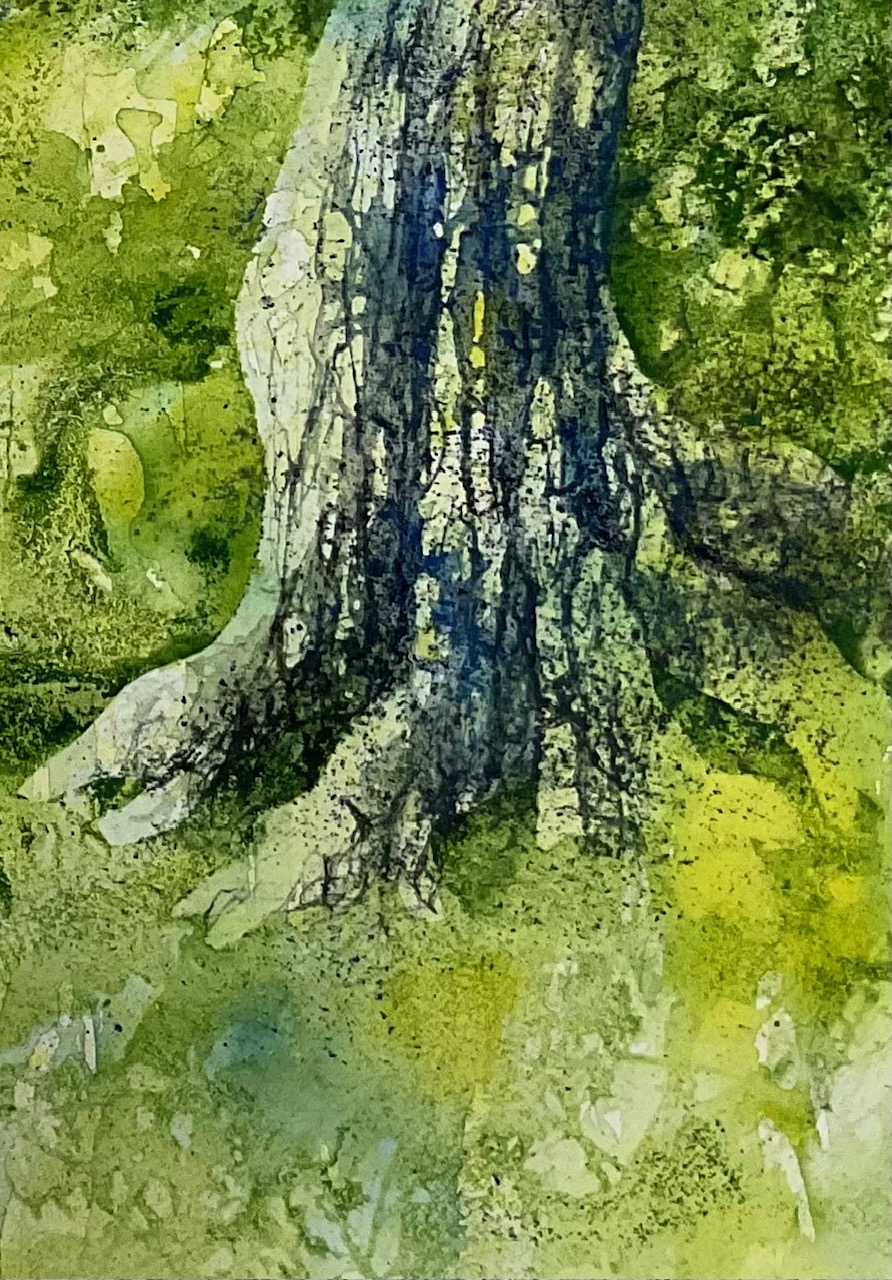
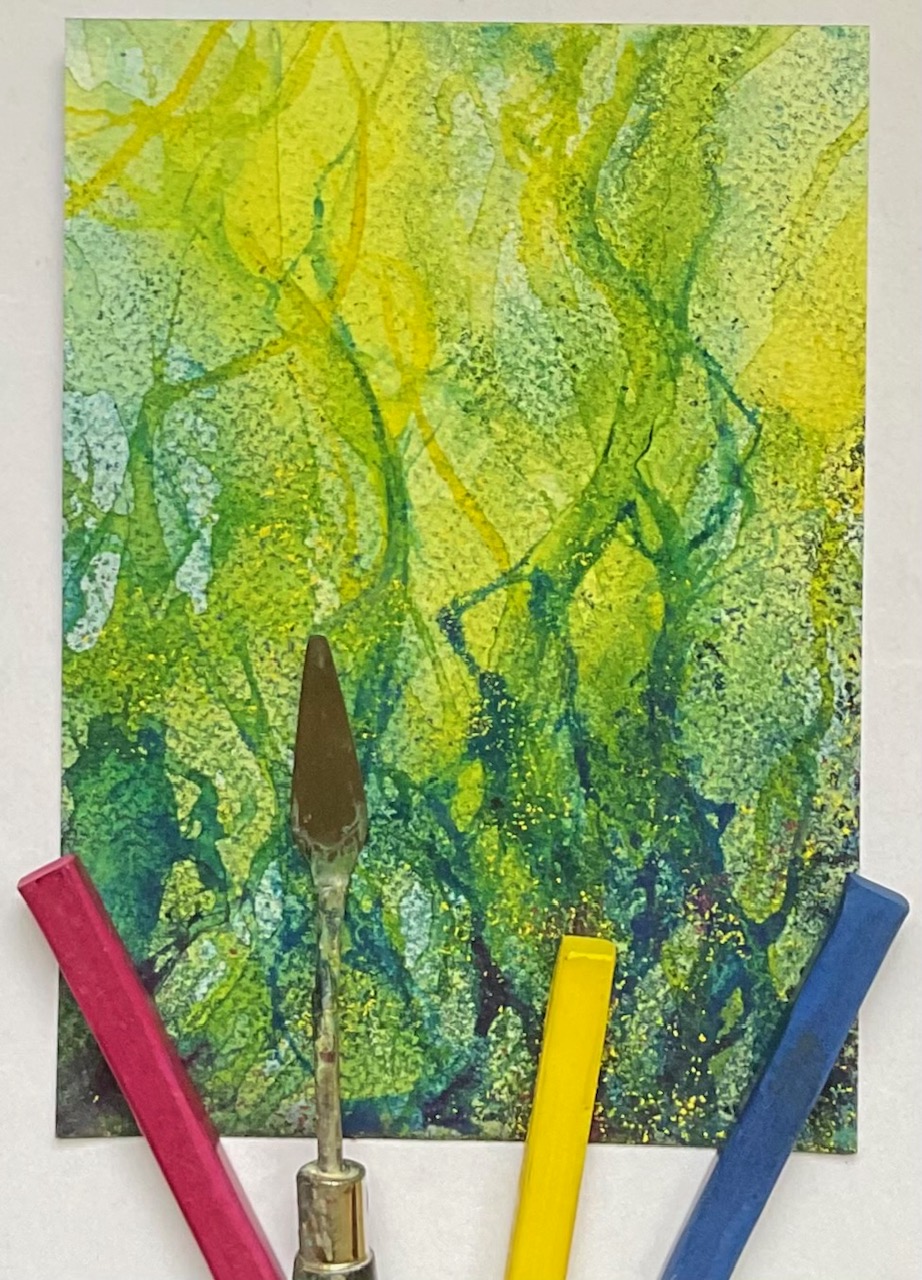
You can add more texture to your paintings with Derwent Inktense Blocks! I started by using pipettes to create several layers of undulating shapes with diluted yellow and blue acrylic inks, mixing them wet-in-wet to make various greens. After these dried, I painted the background with a pale mixture of yellow, green and blue watercolors plus some Winsor & Newton Granulation Medium. Next I quickly shaved off flecks of yellow, blue and magenta Inktense Blocks with my painting knife. These stuck to the wet paint and added floating specks of color on top of the other layers. 


Mystery Technique

Mystery Technique #150

Curious about the techniques used here? You can learn more next month if you’ve signed up for email updates! 

ANSWER TO MYSTERY TECHNIQUE #149:

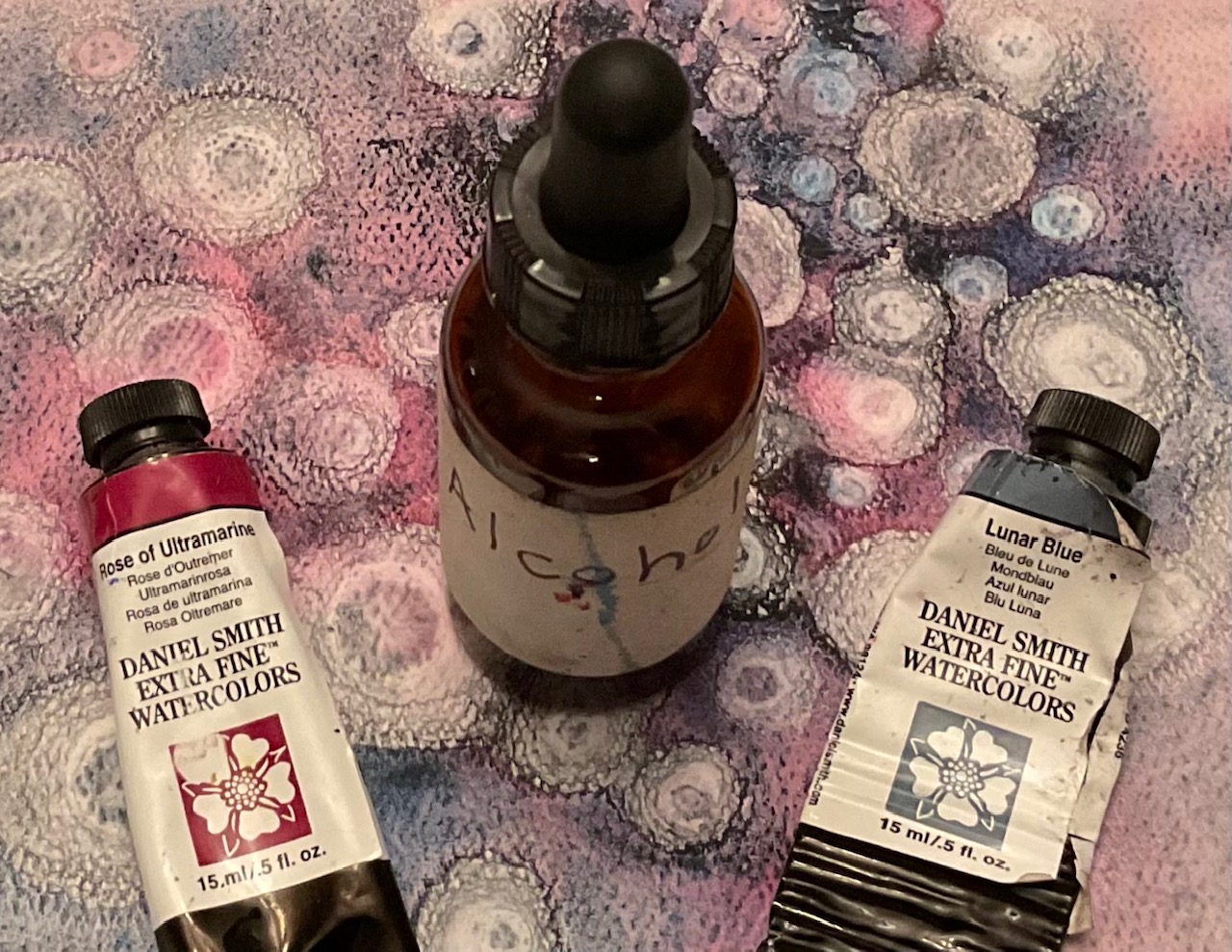
This technique combines granulating watercolors with rubbing alcohol!  First I created a wet-in-wet mixture of Lunar Blue and Rose of Ultramarine. While the paint still had a wet sheen, I quickly added multiple drops of rubbing alcohol. The alcohol pushed the water away, leaving behind a series of nesting circular shapes.