Tag Archives: Wet-in-wet

Mystery Technique

Mystery Technique #146

Curious about the techniques used here? You can learn more next month if you’ve signed up for email updates! 

ANSWER TO MYSTERY TECHNIQUE #145:

First I loaded one brush with French Ultramarine and another with Cerulean Blue, then wet the paper and quickly mixed the 2 blues wet-in-wet while carefully leaving white paper for the cloud shapes. Before the paint dried, I lifted out some wispy edges with a damp sponge. After this layer was completely dry, I gently rewet the paper and added a delicate wash of Permanent Rose to the cloud and the top of the sky, using a damp sponge to soften edges, make transitions and remove excess paint.

Mystery Technique

Mystery Technique #145

Curious about the techniques used here? You can learn more next month if you’ve signed up for email updates! 

ANSWER TO MYSTERY TECHNIQUE #144:

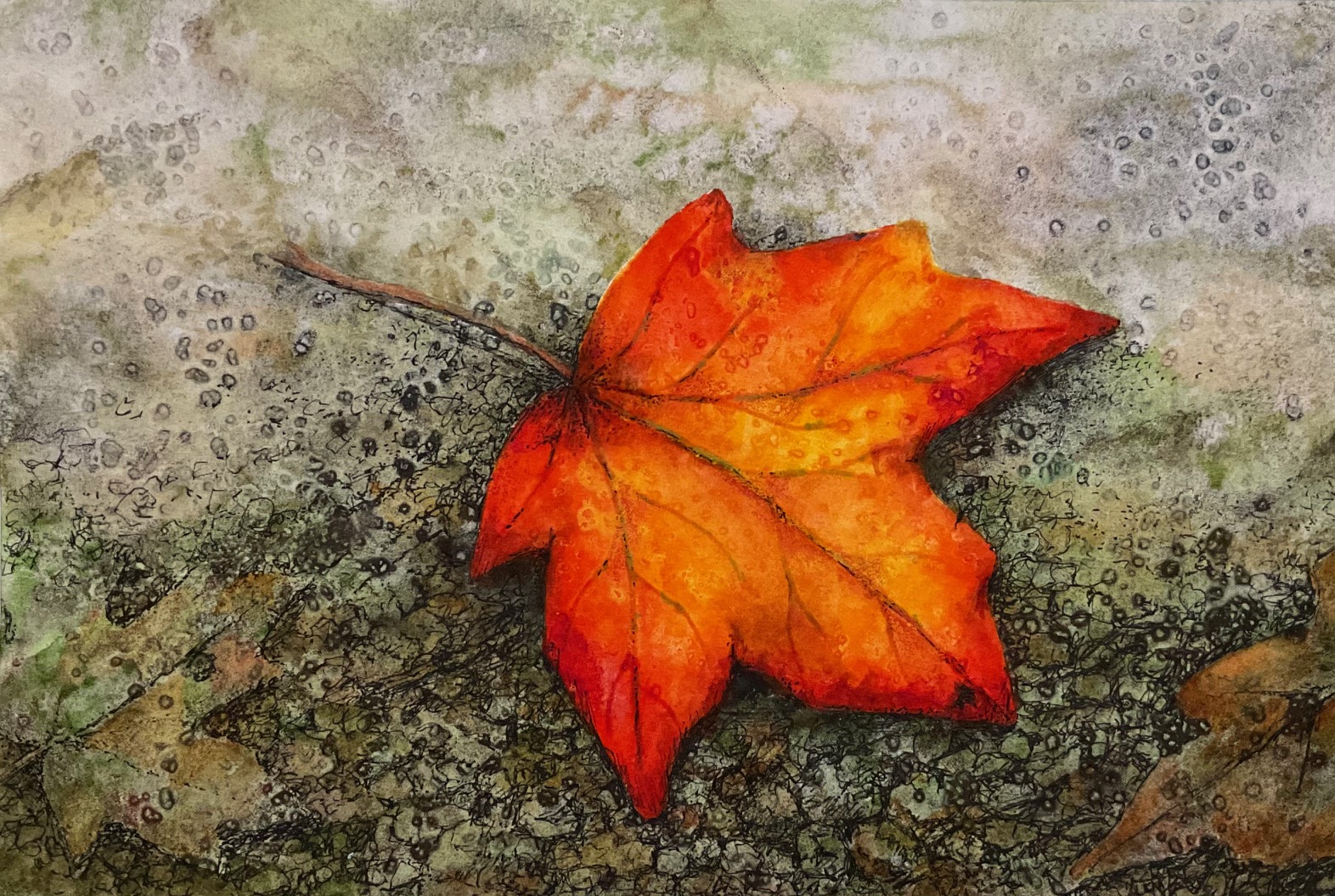
After masking the main leaf, I painted the background with a wet-in-wet mixture of Daniel Smith’s Green Apatite Genuine, Blue Apatite Genuine, and Hematite Burnt Scarlet Genuine. While the paint was still wet, I dropped in kosher salt to add more texture. Next I let that layer dry completely before brushing off the salt, removing the masking, and painting the main leaf. The textures and patterns left behind by the salt became my inspiration for suggesting pebbles, sticks, and partially decayed leaves in the rest of the painting. I used a 0.5 mm Pentel Arts Hybrid Technica Pen to draw a combination of dots, scribbles, and lines for definition and detail. Next I added some light watercolor washes to create shadows and other finishing touches. Here’s a detail:

And here’s the whole painting:

Mystery Technique

Mystery Technique #144

Curious about the techniques used here? You can learn more next month if you’ve signed up for email updates!

ANSWER TO MYSTERY TECHNIQUE #143:

First I cut a maple leaf shape out of clear contact paper and attached it to watercolor paper, pressing down the leaf’s edges to keep paint from running underneath. Next I masked out the stem with a Molotow Masking Marker. After wetting the paper, I mixed diluted Hydrus Liquid Watercolors wet-in-wet and put several partially decomposed leaves towards the bottom. While the paint was still wet, I placed part of a plastic bag on top and manipulated the plastic with both hands to make interesting shapes. I waited for the painting to dry completely before removing the plastic, the masking, and the leaves. Here’s the result:

Shadows under the maple leaf came next, as well as touches of yellow and orange, especially in the partial leaves. I painted the leaf wet-in-wet and quickly scratched out the veins with the end of a metal paint tube before sprinkling in kosher salt for texture. After the paint dried, I brushed off the salt and used watercolor pencils for a few finishing touches, including the stem: